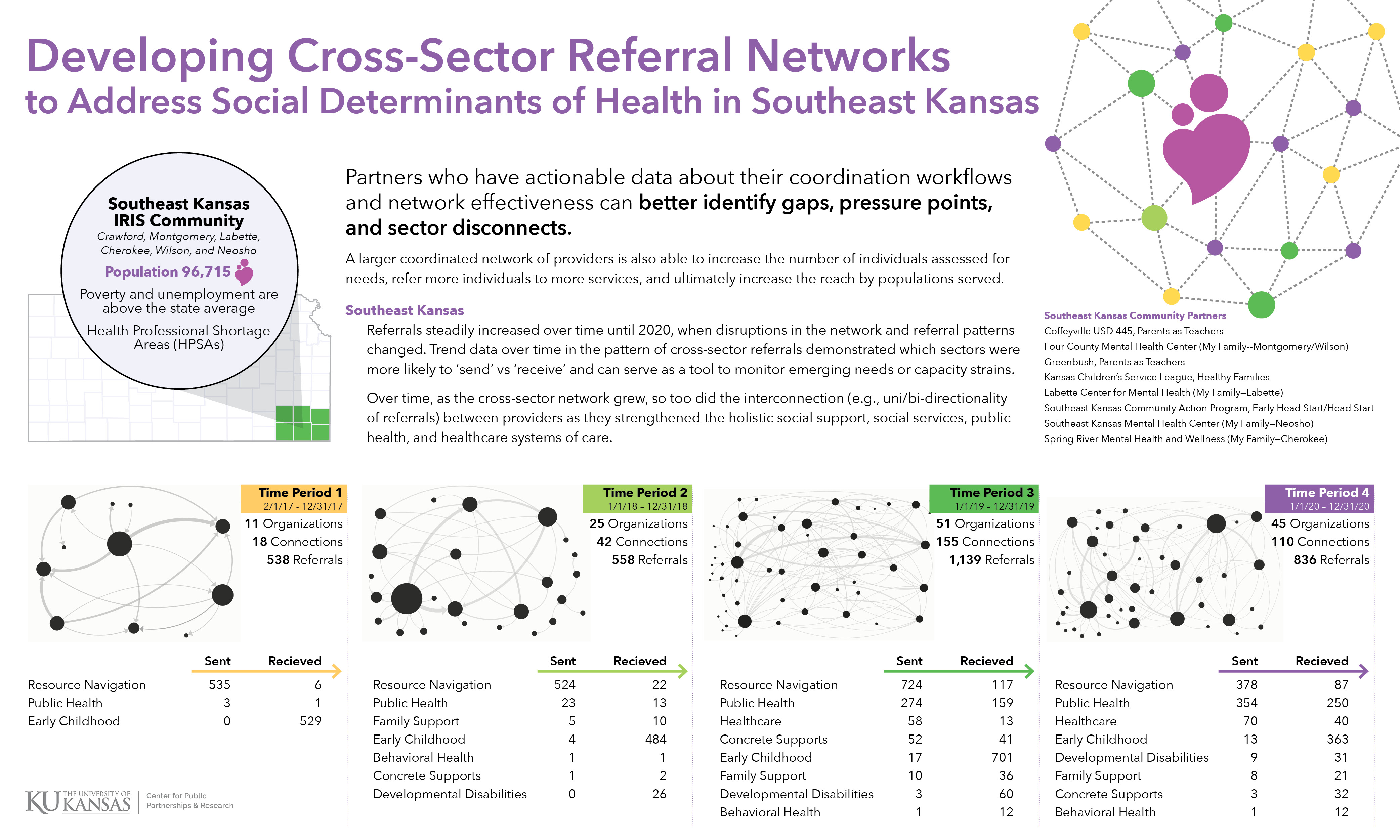
Developing Cross-Sector Referral Networks to Address Social Determinants of Health in Southeast Kansas
Resource Information
September 21–23, 2021
Abstract
The connection between social determinants of health and access to care and social services has long been a focus of public health research and practice. In Kansas there have been concerted efforts to align systems in public health, early childhood, family supports, behavioral health, and social services to better meet the needs of individuals and families. Resource navigation or care coordination models in public health and other sectors have shown promise with accessing care and services. It is with this foundation that a multi-county region in Southeast Kansas began building a more robust and purposeful cross-sector referral network.
Providers in the region have been committed to follow an adaptive collaboration framework to support the success of a shared referral tool, the Integrated Referral and Intake System (IRIS). This phased approach included core components and activities designed to build, nurture, investigate, and refine coordination practices, communication protocols, and referral tool utilization. Over the course of 47 months, including 11 months of pilot data and data through COVID-19, data reflect the commitment of the network’s standardized process of connecting individuals and families to needed services. Referrals steadily increased over time until 2020, when disruptions in the network and referral patterns changed. At that point, the quality of referrals increased, resulting in a higher percentage of referrals enrolling in the programs. This evaluation establishes additional evidence and effectiveness measures for the kind of community-level collaborative approaches required to address social determinants of health.