The PACES Program in the Greater KC Metro IRIS Network
While local leaders shape their IRIS Community, organizations participating in an IRIS Community also hold their own vision that guides their use of the system. Organizations with a clear vision have stronger buy-in; they can navigate system changes more fluidly because both leadership and staff share a clear understanding of IRIS and its benefits. Identifying the right internal champion within an organization who is ready to lead the work is key to ensuring a vision for the system is brought to life.
One such organization is Parent, Adolescent, and Child Empowerment Services (PACES), a program of the Wyandot Behavioral Health Network that provides behavioral health care throughout Wyandotte County, Kansas. The PACES program addresses youth behavioral health by assessing needs and providing appropriate services. Faced with a manual referral process that largely relied on email, the PACES program sought a solution to strengthen their inefficient referral workflows.
PACES Referral Processes
“Before IRIS, everything was email. The tracking was horrible…this was one of the biggest things I wanted to streamline.” – Britney Sanders, Supervisor for PACES Integrated Care Coordination
The PACES program operates under an innovative school-based behavioral health referral structure that enables school district social workers to refer students to PACES for assessment and services. Prior to IRIS, the PACES team used email to receive referrals from schools in the county. Managing these referrals quickly and efficiently was difficult – workflow streams from multiple inboxes overlapped one another, and a lack of clear consent approvals meant PACES staff often had to reach back out to confirm consent to contact the family. Further, because referrals were managed through email, data was siloed, making long-term data tracking a challenging task.
“…Once I connected with [local leaders from the Greater Kansas City Metro IRIS Network]…I immediately told our CEO and executive director, let’s get this started as soon as possible!” – Britney Sanders
The push for a more streamlined referral workflow was largely driven by Britney Sanders, the Supervisor for PACES Integrated Care Coordination. As the leader of the team responsible for internal and external referral coordination, she was well-positioned to analyze gaps in their processes and recognized IRIS could resolve their data and workflow pain points. While the Wyandot Behavioral Health Network was previously aware of IRIS, it wasn’t until Britney presented a use case for their organization’s use of the system that onboarding picked up in earnest.
The Impact of IRIS
With consistent support from the Local Leadership Team and the advocacy of PACES leadership, the program successfully onboarded into the Greater Kansas City Metro IRIS Network in 2023. Once PACES was integrated into IRIS, the necessary schools for their referral workflow were added to the network, with social workers in these schools tasked with sending referrals to PACES. Utilizing IRIS has allowed the PACES team to streamline both their incoming and outgoing referrals by facilitating quicker response times, documenting consent, and creating trackable referral loop closures.
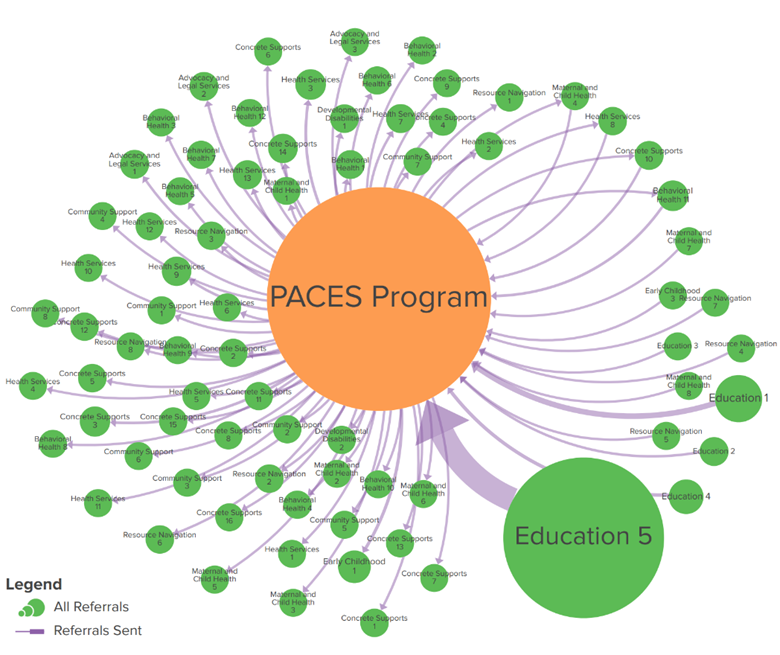
Fig. 1. PACES Referral Activity as of April 1, 2026
The success of these coordination improvements is apparent in their IRIS data. As shown in Fig 1, PACES operates as a central actor in their referral process. Each circle represents a partner organization, with larger circles indicating higher referral activity. The lines between them show referral connections, with thicker lines reflecting stronger, more frequent pathways. When PACES receives referrals from school social workers, they reach out to families to schedule intake appointments. As of April 2026, over 2,000 students have been referred to PACES, with 73% of those referrals resulting in a student enrolled in behavioral health services.
By being connected to the broader IRIS Network, the Integrated Care Coordination team can also leverage cross-sector services for students and families when a student and their family need support outside of what PACES offers. To this end, PACES has coordinated more than 400 resource connections to services (such as health services, resource navigation, and concrete supports) across nine sectors, ensuring that students and families have access to a full range of necessary supports.
Data in Action
With easy access to referral data, Britney and her team were able to complete data scans to identify workflow improvements. Their data-powered workflow adjustments are many and varied. For instance, the team assessed the length of time between when school social workers sent referrals to when the Integrated Care Coordination team acted on those referrals. By analyzing their average response time, staff developed greater awareness of their responsiveness and implemented workflow adjustments to ensure prompt responses to incoming referrals. This resulted in a 23% increase of scheduled intakes in 2025.
Britney also analyzed geographical referral data to better understand the frequency of referrals from each school. After finding that a single school referred 50 students during one school year, PACES placed a community-based therapist at the school, increasing access to behavioral health support for students. In this way, IRIS supported PACES’ data needs and provided both long- and short-term analyses that directly impacted their organization.
The Role of Organizational Visioning in Generating Buy-in
Gaining buy-in from school districts was crucial to establishing PACES referral workflow in IRIS. Even with PACES’s eager adoption, their IRIS workflows were only possible if schools engaged in the IRIS Network. Britney and the Greater KC Metro Local Leadership Team worked collaboratively to create warm handoffs for each school onboarding into IRIS, ensuring they were trained on the system and aware of referral standards. Mandi LaRue with the Greater KC Metro Network emphasized Britney’s role facilitating and supporting school district’s onboarding, “Britney [coordinated the details and] told me when to show up for orientation to train those social workers!”
Britney’s passion for what IRIS could do to amplify PACES translated into her emergence as key champions of their IRIS Network. Her enthusiasm for the platform resulted in active recruitment of additional programs with which she had a relationship - such as a program serving justice-involved youth and families - and connecting them with Greater KC leadership for onboarding. In this way, Britney facilitated expansion of the IRIS network to include schools and providers who may otherwise not see the vision for IRIS or respond to Greater KC leadership outreach attempts.
A Model for Collaboration
PACES not only established a referral pipeline with schools to enhance partner workflows but also strengthened the broader Greater KC Metro IRIS Network’s partner diversity. This, in turn, reinforced the value of IRIS to the leadership within the Wyandot Behavioral Health Network as a valid mechanism for their wider organization. Since the successful onboarding of PACES and their referring partners, two additional programs at Wyandot Center joined the network, indicating broader organizational buy-in. The experience of PACES shows how strong community leadership, a partner with a vision for their system use, and active collaboration can effectively expand access to necessary care for families.
IRIS is most effective when driven by organizational champions who are actively engaged in the broader IRIS Community. An engaged organization with a strong vision for their IRIS usage can facilitate a warmer hand-off between organizations and local leaders as they learn or adapt processes that streamline the referral experience for families. While IRIS has facilitated service delivery efficiencies, it’s the ongoing sustained vision of partners like PACES that can lead to better onboarding outcomes and increased organizational commitment.